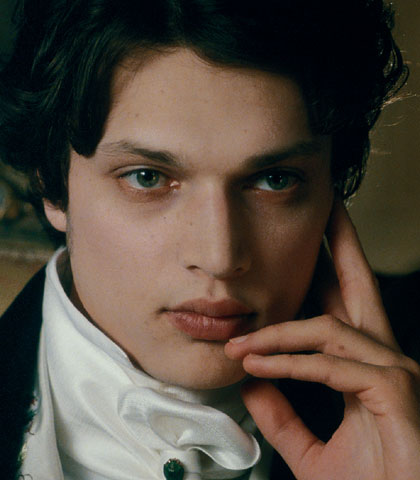
Exam: Interview with Stuart Hazeldine

Exam

Format: Cinema

Release date: 8 January 2010

Venue: key cities

Distributor: Hazeldine Films/Miracle

Director: Stuart Hazeldine

Writers: Simon Garrity, Stuart Hazeldine

Cast: Luke Mabby, Adar Beck, Nathalie Cox, John Lloyd Fillingham, Jimi Mistry

UK 2009

85 mins

Known until now for his work as a Hollywood scriptwriter, Stuart Hazeldine is making his directorial debut with Exam, a tight, suspenseful low-budget thriller. In what seems like the near-future, eight short-listed applicants looking to secure a job in a big pharmaceutical company are locked in a high-tech room to take their final test of the interview process. An intimidating invigilator reads out a set of instructions that they must follow or be disqualified. They have 80 minutes in which to find one answer to one question. But when they turn over the papers, they are blank: they have to find the question first. Unfolding in quasi-real time, the film observes the group dynamics and the different reactions of the characters in a pressured environment. Virginie Sélavy interviewed writer/director Stuart Hazeldine on the occasion of Exam‘s screening at the Raindance Film Festival in October 09.

Virginie Sélavy: You’ve been working as a scriptwriter until now, is that right?

Stuart Hazeldine: I’ve been selling scripts since 1995. I started very young as an action writer, then I became mainly known as a sci-fi guy. I’ve just been working on Milton’s Paradise Lost with Scott Derrickson, so now I’m moving into different areas like religious fantasy/sci-fi (laughs). It’s the old predictable story: some things turn out like you imagine, other things turn out differently, and you just want the opportunity to put your vision on film and have the whole of your ideas out there instead of people cherry-picking them.

VS: Is that why you decided to direct your first film?

SH: I’d been planning to direct since I was 19. I never liked the idea of a writer going on to direct out of frustration. But directing takes a lot longer to get into, so writing was my route into making films. I felt that the story is the foundation of every movie, so I wanted to get very good at building foundations before directing. I don’t regret doing that, but you can very easily get sucked into just scriptwriting when you’re being paid well. Thankfully, I have good relationships with a couple of genre directors. I’ve worked with Alex Proyas four times now. I’ve just done an adaptation of a BBC sci-fi trilogy from the 60s called The Tripods with him. It’s something that both Alex and I grew up with and were fans of. I like having repeat business with directors who I think have got talent. You may not make a great movie every time, but you are more likely to, and I’ve been able to learn from them. It took longer than I expected to direct something of my own. But I financed the film myself, so I was saving up money and looking for an idea that could be done very cheaply.

VS: Was it your choice to self-finance or was it because it is difficult to find funding?

SH: I always planned to self-finance it. Everybody always tells you that you should never put your own money into a film, so I quite liked the idea of ignoring that rule. I thought, well, if you shouldn’t put money into your film, who should? I think the idea is that studios make money by spread-betting on 10 or 20 films. But if you can control the risk, and if you are in a rare position where you can actually make the film you want, then I think it’s not a bad thing to do. I figured the idea for Exam had a commercial hook: you have young, ambitious, good-looking ABC1 personalities stuck in a room to take an Apprentice-style test in a near-future environment where there are huge stakes. The one thing they’re not prepared for is nothing – they’re not prepared for no guidance, no question. It’s a commercial hook but it’s also philosophically interesting. You think they’ll be good at team work, at taking the initiative, at writing an essay on why they should be hired, but what happens when very structured, driven people are given no guidance and suddenly they have to think in a very lateral way? What would that do to their different psyches? And on a macro level, life itself is a blank piece of paper, so what do you project onto that blank piece of paper?

VS: How did you create the different characters? Were you influenced by reality TV?

SH: I have to confess I don’t watch reality TV. I think if I did, I’d watch The Apprentice because I could watch it without feeling too dirty afterwards. I think that show and Dragon’s Den are interesting because they’re about business and the contestants have some talent. In Exam, I started with the most obvious character confrontation, which is the one between the characters of White and Black. White is essentially a social Darwinist, this sort of wide boy trader who simply believes in the survival of the fittest and sees the test in that way; Black is someone who believes that everyone should work together as a team, and he draws that from his religious principles. That was like the midnight position and the six on the clock, and then I started trying to fill in the other characters. It started out as a short film script, which originally had six out of the eight characters in it. It had Brunette, who was competing for leadership of the team with White. Deaf became a bigger character in the final feature draft. He started out as someone who was a little bit more of a mad philosopher, someone who seemed to have been pushed over the edge, but maybe had some extra insight. In the feature draft, I added Brown and Dark, the gambler and the psychologist. Dark thinks that the answer is all about human behaviour and relationships and can read the other characters in the room, whereas Brown is the poker player who won’t show you his cards until he’s ready to strike. So in a way, he’s as much of a social Darwinist as White is, but White isn’t self-aware whereas Brown is. I like the fact that Brown likes the chaos. When White says, ‘they’re playing with us’, Brown says, ‘great, isn’t it?’ He’s still determined to win but he’s not scared of what’s going on.

VS: Exam is a modern take on the locked room mystery. Is that something you wanted to explore?

SH: I wanted it to have a bit of the locked room, a bit of the morality play, a bit of Jean-Paul Sartre, a little bit of everything (laughs). I was trying to mix it all up but I wasn’t trying to go after too many influences too consciously, otherwise it becomes an homage and nothing else. I like works that have a lot of levels, like in Shakespeare: there’s something in it for the smarter people who care to look for it, and there’s also the grave digger’s scene in Hamlet with lots of humour for the masses. That’s what I tried to do – I don’t know if I’ve succeeded! (laughs)

VS: There have been a few films that have been trying to reinvent that locked room set-up, like Cube or Fermat’s Room

SH: Yes, and The Killing Room this year as well. I think it’s an interesting genre. I missed Fermat’s Room, but from what I could tell, it seemed more coldly intelligent than Exam because it is about mathematicians. I wanted to have a universal scenario that people would relate to so I thought a job interview would work. Somebody who saw the film early on called it ‘the Wachowski Brothers meet Harold Pinter’, which I thought was great and wanted to steal for the poster! (laughs). I like examining human nature and what happens when different philosophies of life, or extremes of altruism and selfishness, come up against one another. So for me, the one-room-ness of it was largely just about being able to finance it. I like the idea of creating a microcosm of the world, which is what the exam room is. It’s about why we are here.

VS: There is no indication of the time in which the film is set, but the harsh-looking, high-tech room makes it feel like it is set in the near-future. It seems like a world very close to ours, but not quite ours, which gives the film a certain strangeness. Was that the sort of effect you wanted to achieve?

SH: I like the idea of leaving it up to people, to make the film accessible. Science fiction often has a problem. People who love science fiction really love it, but people who don’t will avoid even if it’s got something to say to them. So I didn’t want Exam to be too exclusive. There was an earlier version of the script that was more sci-fi and some of the concepts that were being discussed were about nanotechnology and other things that I’m interested in, but I realised that some people wouldn’t be, so I stripped them out. It was the same with the names. I tried not to focus people on real names. It wasn’t so much an homage to Reservoir Dogs, although some people might think it is. It allows people to focus more on the characters’ views of the test than on them as unique individuals. I wanted them to represent world views.

VS: They come across as types.

SH: Yes, they’re types, absolutely, and I’m completely unapologetic about that fact. I wanted them to be very international and multi-ethnic to allow the different people in the audience to say, I’m that person.. But after watching the film for 30-40 minutes, they might say, OK, I might be blond and Caucasian but Brown represents my world view, so I’m actually him. I don’t know if I succeeded, but I liked the idea of people identifying with one character and then slowly focusing in on the idea that it’s actually about general philosophies.

VS: The other interesting thing is the time device. Ticking time is always an effective tool to build up tension but you also make the events unfold almost in real time. What was your aim?

SH: I like limitations and the walls of the room are one limitation, one dimension, and time is another. Again, it’s a metaphor: we have a limited time to decide what we think life is about. It’s also my Hollywood training, I like things to be on a clock. When I’m sent novels to adapt I’m always compressing. Film has that effect. There are a lot of things in the film that I did for multiple reasons. The clock was one of the most stressful things in the film, trying to physically work out how we were going to shoot with the clock and stick to that. When we did our first cut of the film, the actual real-time cut from when the clock starts to when the clock ends was exactly 80 minutes. My editor and I were really surprised. The problem was, we wanted to cut stuff, so actually it ends up closer to 74 minutes. There are little jumps in there.

VS: In a way, it seems to be a Hitchcockian sort of film in the sense that the plot appears to be a pretext to build tension and suspense for the pleasure of the audience.

SH: The plot is like the wrapping for the ideas, and the ideas are a mixture of philosophical, religious and psychological observations. It’s about human behaviour and life, that’s the core of what I’m interested in. Stylistically, I keep hearing Kubrick from many people who have seen the film, and I’ll fess up to doing a few conscious references there. I used to tell people that the white sheet of paper and the black screen were our version of the monolith in 2001: A Space Odyssey. The long tracking shot towards the screen at the beginning of the movie is all quite precise and controlled. The film starts off with these very controlled tracking moves and a lot of composition and cuts, until the middle of the film, when we brought in the hand-held camera. That’s the point where the characters have turned on one another and they’re trying to uncover some truth from each other. I’m definitely quite a stylistic person, but I just don’t want to be only a stylistic person.

Interview by Virginie Sélavy

Read Alex Fitch’s review of Exam in the winter 09 issue of Electric Sheep, which looks at what makes a cinematic outlaw: read about the misdeeds of low-life gangsters, gentlemen thieves, deadly females, modern terrorists, cop killers and vigilantes, bikers and banned filmmakers. Also in this issue: interview with John Hillcoat about his adaptation of Cormac McCarthy’s The Road, the art of Polish posters according to Andrzej Klimowski, Andrew Cartmel discusses The Prisoner and noir comic strips!

I’m Dangerous with Love: Interview with Michel Negroponte

I'm Dangerous with Love

Sheffield DocFest

4-8 November 2009

Sheffield

Sheffield DocFest website

Michel Negroponte’s website

The documentary filmmaker Michel Negroponte was already familiar with the world of drug addiction before he embarked on I’m Dangerous with Love; his 2005 documentary Methadonia focused on the patients who frequented a methadone clinic on the Lower East Side of New York City, recovering heroin addicts living in chemical limbo as they swapped Schedule 1 substances for prescription medication. His latest project examines an alternative approach to breaking the cycle of addiction, one that is not officially endorsed or prescribed by registered health care practitioners. Ibogaine is a hallucinogen that comes from the root of a West African plant and has been used by shamans for centuries, but in the United States it is classed as a controlled substance and is therefore illegal. At the centre of Negroponte’s film is Dimitri Mugianis; a reformed addict who underwent an ibogaine treatment at an Amsterdam clinic following 20 years of substance abuse, Dimitri is now an ‘ibogaine provider’, trading chemically-induced highs for adrenaline-fuelled escapades as he works with an underground network to help other addicts kick the habit. Negroponte followed Dimitri over an extended period, becoming so involved with his subject that he tried ibogaine himself in order to fully communicate the experience and, after a treatment at a snowed-in Canadian home went wrong, travelled to Gabon with Dimitri to learn more about the hallucinogenic properties of the plant root. Laced with decidedly dark humour, I’m Dangerous with Love is both a compelling character study and an exciting excursion into an underground subculture. John Berra met with Michel Negroponte at the 2009 Sheffield DocFest, where I’m Dangerous with Love received its world premiere.

John Berra: In your opening voice-over for I’m Dangerous with Love, you state that you did not intend to undertake another drugs-related project. How did you become immersed in the ibogaine underground?

Michel Negroponte: My film Methadonia was shown at the New York Film Festival in September 2005 and then aired on HBO a month later. HBO is a fascinating channel for documentary filmmakers because it has a huge number of viewers; people who don’t normally watch documentaries will watch a non-fiction film on HBO simply because it’s there. The number of people who saw Methadonia stunned me and we received many emails, phone calls and letters. One email was from Nick, a young man from outside Chicago who had a heroin habit. He was about to try this experimental cure using an African hallucinogen, and he wanted me to film him going through the treatment. My first reaction to Nick’s email was to say that I had spent three or four years in the world of addiction, that I was still recovering emotionally and psychologically, and that I really wasn’t interested in doing a film about ibogaine, even though it sounded fascinating. But Nick wouldn’t let go. I started to do some research and quickly met many of the main characters in the ibogaine underground movement of New York City. Everyone I spoke to said, ‘You have to meet Dimitri’. When I finally did, there was something about his persona, his presence, and his intensity that made me think he could be the subject of a film. When you make these kinds of ‘present tense’ documentaries, it’s a tremendous act of faith because I knew very little about ibogaine, very little about Dimitri, and absolutely nothing about what might happen in the next several years if I committed to making a film. My underground adventure lasted four years.

JB: I’m Dangerous with Love has a tremendous narrative drive for a documentary; were you concerned when editing the film that it was too exciting and not sufficiently fact-heavy?

MN: First of all, I’m not a journalist, I’m a filmmaker. I’m much more interested in the idea of photographing what’s happening in front of the camera than merely documenting it. Everything from the framing of a shot to the editing of a scene is important to me. I want the finished film to look intentional and precise. I want it to capture the essence of being there. Like most of my other films, I’m Dangerous with Love is character-driven. It’s portraiture. I may not include interviews with medical experts about ibogaine in the film, but that doesn’t mean I don’t think the information is important. While being too fact-heavy can weigh down the storytelling, I try to carefully weave information into my voice-over. It’s a stylistic choice. One of things I have found as I have made more and more films is that I shoot very little. I’m much more interested in the idea of photographing scenes. I never turn the camera on until I’ve composed a shot through the viewfinder, and I think a great deal about the photographic elements.

JB: I particularly liked your detached, darkly humorous voice-over, which recalls the writing of Philip K Dick and Douglas Coupland. Was it important for you to find the humour in this painful world of drug addiction?

MN: The subject matter of the film is so intense and dark that some lighter or comedic moments seemed necessary. In the first 10 minutes of the film there’s a tough scene of Nick vomiting in a hotel room from heroin withdrawal, and I could imagine a number of people getting up and leaving the theatre or switching the channel. So I hope the occasional humour of my voice-over helps people stay with the story.

JB: In the first half of the film, Dimitri seems to be living for the thrill of being an ibogaine provider. Were you concerned that he had substituted one addiction for another?

MN: At one point, Dimitri looks at the camera and says something like, ‘I’m addicted to chaos. Things in my life are going very smoothly. I’m not using anymore, but I need to get my hands dirty’. He’s not nine-to-five and he likes risk. I was intrigued by his bravado, but I think the film captures a change in his personality. After the terrifying event in Canada, when a young man almost dies during a treatment, Dimitri is forced to reassess what he’s doing. By the time he’s been introduced to African shamans and we’ve returned from Africa, he’s a different person.

JB: I was very impressed by Dimitri’s belief system; the bad experience in Canada did not stop him from wanting to be a part of the ibogaine network, but he realised that he needed to learn more about the process and adopt a new approach towards his work.

MN: He’s obviously an incredibly resilient guy; he’s been close to death himself on a number of occasions because of drug use. It would have surprised me if Dimitri had decided after Canada that he never wanted to do another ibogaine treatment. The trip to Gabon reinforced his belief in himself and his mission. It changed his life and took the film in a direction I couldn’t have anticipated.

JB: What was your motivation to take ibogaine yourself?

MN: Before I took ibogaine, I had seen several treatments, and yet I didn’t understand how a hallucinogen could help a drug user detox. Also, most people who take ibogaine find it difficult to describe the psychedelic journey. I wanted to see what it was like, so I asked Dimitri to give me a dose. The trip is like a dream. If you don’t have a pad and pen at your bedside and scribble notes, you may not remember anything the next morning. You have to make a real effort to put the visual and aural experience into words. I guess you could say I became a believer after I took it, and that changed the course of the film.

JB: What are the characteristics of the ibogaine underground and what distinguishes it from more conventional methods of health care?

MN: One of the things I find so intriguing is that former drug users like Dimitri created the ibogaine movement. In the film, you see several addicts go through ibogaine treatments and they return later to help Dimitri take other addicts through treatments. Drug users understand detox and they know how to be empathetic. I’m not sure you can say the same thing about conventional health providers.

JB: What is the significance of the title, I’m Dangerous with Love?

MN: It’s a line from one of Dimitri’s poems. Interestingly enough, he wrote the poem in 2002 just after undergoing the ibogaine treatment in Holland that made him stop using. He inscribed the poem in the ‘guest book’ of the woman who took him through the treatment. The poem ends with the lines, ‘I’m dangerous with love, I’m dangerous with love’. After the crisis in Canada, I thought it was an appropriate title for the film because Dimitri can be dangerous with his love. The title also has a double meaning; my subjects are people who live on the fringes, and I’ve often tested ethical and moral boundaries by filming them. Sometimes I think my passion for making documentaries makes me dangerous as well.

Interview by John Berra

Short Cuts: LSFF 2010 – Rich Pickings Presents: Lolita Complex

Little Red Hoodie

7th London Short Film Festival

8-17 January 2010

Rich Pickings Presents: Lolita Complex

Date: 10 January 2010

Venue: Shortwave Cinema, London

LSFF website

‘A mini, weird conference of ideas’, as festival programmer Carla MacKinnon describes it, each Rich Pickings event takes a single theme and explores the issues involved through a combination of short film screenings, discussion, live music and art performances. The aim is to get people engaged with a particular topic and draw in crowds who might not usually attend film festivals. As MacKinnon explains: ‘A lot of the festivals that I work with are designed to showcase good new short film work and provide a path for filmmakers to get into the industry… which is good and really necessary, but I suppose there was this whimsical side of me that wanted to do something slightly more exploratory.’

The first-ever event, focused on translation and adaptation, took place earlier this year at the Shortwave Cinema in Bermondsey, London. With literary readings and even a game of Chinese Whispers to illustrate how narratives break down, the central focus was a back-to-back double-bill screening of GW Pabst’s 1931 French- and German-language versions of The Threepenny Opera, which aimed to highlight the differences in these translations.

Another literary classic, Nabokov’s Lolita, is the starting point for the second Rich Pickings event, due to take place at the London Short Film Festival on January 10, 2010. Tackling a tricky subject area, the programme will take a look at teenage and adolescent sexuality in all its forms – ‘imposed, real and perceived’. MacKinnon admits that it’s not an easy theme to curate: ‘What really appealed to me about it is that it scared me because it’s not something I’m comfortable with, and it’s not something where I know what I think about it.’ MacKinnon has decided to kick off proceedings with the rarely seen adolescent films of video artist Sadie Benning: ‘I wanted to start out with the voice of a teenager, but a teenager who kind of knew what she was doing.’ As the daughter of filmmaker James Benning, Sadie was a culturally astute adolescent, and her low-fi, Pixelvision films create a certain voyeuristic discomfort, as she explores her sexuality in intimate detail.

Many of the other films being screened present teenage sexuality from an adult perspective: Girl like Me (Rowland Jobson, 2009) follows a middle-aged man as he mistakenly ends up on a date with a young teenage girl; and Little Red Hoodie (Joern Utkilen, 2008), a disturbing take on the familiar fairy tale sees an adolescent girl crossing the Scottish highlands in a provocative red T-shirt as she delivers a television to her grandmother’s house. In addition, a child psychologist will talk about Nabokov’s Lolita, bringing a voice from outside the film industry and an important ‘dose of reality’ – a refreshing characteristic of Rich Pickings.

During our conversation, MacKinnon tosses around all sorts of intriguing options for the programme, from Japanese animé to Kenneth Anger’s fetishisation of youth and a late-night screening of Eric Rohmer’s Claire’s Knee (1970): ‘It’s like anything with programming, you go down a lot of different, interesting routes and beautiful by-roads before you hit the highway.’ She reveals she has hundreds of themes she wants to work on in the future, ranging from the serious (visions of the end of the world) to the fun and silly (‘monkeys versus robots’). With MacKinnon’s energetic programming, there should be many rich pickings for audiences at LSFF.

Eleanor McKeown

Fucked Up’s Jukebox

Fucked Up

Photo by David Waldman

If you’re going to name your band Fucked Up, you can’t mess around. You’ve got to really bring it or else what’s the point? Luckily, Canadian punks Fucked Up do really live up to their name. Their live shows are a sight to behold, with theatrical stage antics spilling out to the audience, often accompanied by blood and nudity. Despite this, the band won the prestigious Canadian Polaris Prize, showing that you can have a naughty word in your band name and still be taken seriously. A collection of their many hard-to-find 7” and 12” tracks are being brought together on a double CD and LP to be released on 25 January on Matador Records. More information on the Matador website and Fucked Up’s blog. Frontman Damian Abraham, aka ‘Pink Eyes’, gives us his 10 favourite films. LUCY HURST

1- The Phantom of the Paradise (1974)
Hands down my favourite film of all time. Directed brilliantly by Brian De Palma who is someone I have always felt is underrated as a director. It is a tale that is one part Faust and one part Phantom of the Opera but set against a glam rock backdrop. The music was written by one of the film’s stars, Paul Williams, and it is one of the great, unheralded soundtracks of all time. I first saw this film as a child late one night on TV and for years thought I must have imagined it. It wasn’t until about 12 years ago that I found out it was indeed a real film.

2- Style Wars (1983)
I love documentaries but for the most part I find they don’t stand up to repeated viewing. That said, I have watched this one at least 30 times. It is basically an overview of graffiti in New York in the early 80s but it is so much more than that. A perfect time capsule of a youth culture in its infancy that in no way belittles its subjects but at the same time really never canonises them either. What is left is an honest portrait of the people that made this culture, which ended up sweeping the world. A graffiti writer named Cap (who is featured rather prominently) is the greatest cinematic villain of all time. For the longest time this film was nearly impossible to find. I can remember having to go to the Toronto Reference library to watch a 16mm print version because it was the only way to see it. Nowadays you can order it on the internet and just watch it in the comfort of your own home… oh the modern world.

3- 24 Hour Party People (2002)
There is a great quote about the difficultly of making a film about an artist and I guess that the same must apply to musicians as well. The ‘rock and roll film’ is a very finicky beast. Normally they wind up terrible (Almost Famous), occasionally they wind up all right (Sid And Nancy) but on rare occasions they wind up amazing. This is one such occasion. In this post-modern take on the origins of post-punk, Michael Winterbottom employs direct address, archival footage and ‘found footage’ to make a film worthy of the story it is telling.

4- Casino (1995)
For most people, the obvious Scorsese gangster film is Goodfellas. While I love Goodfellas, I think his masterpiece is Casino. More measured and at the same time far more fully realised than any of his other films.

5- Garbage Pail Kids (1987)
When this movie came out, my brother and I made my parents drive way to the outskirts of Toronto to the only place that was playing it. At that young age I couldn’t understand why a movie that I was dying to see was only playing in such a remote place. All these years later, armed with the wisdom of the mitigating 25 years or so, I can understand a little bit more why this might not be for everyone. It is a spin of the popular trading card series (yes, you read that right). It centres around a boy of about 15 who is inexplicably bullied by a guy well into his 30s. The teen stumbles across magic garbage that contains a bunch of gross kids (the Garbage Pail Kids) who come to his aid. The bully’s girlfriend, who is in her late 20s, falls in love with the teen (yes, you read that right), and it just keeps getting weirder. It has everything you could want from a film: musical numbers, puppets, genocide, general insanity, etc.

6- Across 110th Street (1972)
This is constantly lumped as a blaxplotation film, which I think does it a disservice. Sure, it has many of the hallmarks of the genre: made in the 70s, an incredible soul soundtrack, a focus on inner city urban life and of course black central characters, but to pigeonhole it like that ignores the fact that this is a film that offers a far greater social commentary than something like Shaft. It serves as a critique of the racism of the police, the treatment of veterans, the death of the inner city and the general failure of the American Dream. It was directed by the amazing Berry Shear, who was predominantly a television director, and almost all of his films could be on this list.

7- Rambo IV (2008)
This is perhaps the purest action film ever made. The plot is secondary to the action. The only character development given to the bad guys is making the leader a paedophile. Trying to analyse this film any further would be a disservice to the beauty of its simplicity. I had no interest in seeing this when it came out and I am kicking myself that I missed my chance to see it in the cinema.

8- Deathwish II (1982)
It is such a rare occurrence that a sequel is better than the original. Aliens? Godfather II? Those are debatable, but the superiority of Deathwish II is not. Deathwish II is pure pathos. In the first film, Charles Bronson’s character becomes a vigilante, but in this one he becomes a god of vengeance. The later sequels have ventured further and further into the realm of impossibility, but this one manages to walk the thin line between plausible and implausible.

9- Shogun Assassin (1980)
Most people’s exposure to this film comes from the use of samples from its dialogue on the Gza’s classic ‘Liquid Sword’ album but the film is a masterpiece in its own right. It was made by re-editing two of the Japanese Lone Wolf and Cub films into a single movie with English dubbed over the top. This is the only film that I think is improved by dubbing, thanks in large part to the amazing voice talents of the actor who plays the main character’s son. He serves as the film’s narrator and captures the bleakness of the story perfectly. I love revenge films and this is one of the best.

10- Various
The final spot I will use to give some honourable mentions as I can’t decide which film to put in the spot: Wild in the Streets (1968), Star Wars (1977), The Warriors (1979), Seven Samurai (1954), Touch of Evil (1958), Django (1966), Oldboy (2003), Blue Spring (2001), Goodbye Uncle Tom (1971), Comic Book Confidential (1988), Crumb (1994), Vinyl (1965), The Decline of Western Civilization (1981), Gummo (1997).

Review of the Year 2009

Let the Right One In

The Electric Sheep team look back at the heroes and villains of 2009.

THE GOOD

Love Exposure
A four-hour long hymn to the redemptive power of love, Love Exposure creates a magnificently alien universe that careers from cartoony farce to serious drama. For all its oddness, the film has an epic, biblical quality, and there is a truth in the characters and their relationships that keeps us gripped despite the marathon length. ELEANOR MCKEOWN

Let the Right One In
This sweet and bloody subtle horror tale charts the relationship between lonely 12-year-old Oskar and vampire girl Eli. There is an ever-present sense of danger whenever Eli and Oskar are together and it is this threat underlying their love that makes the film so touching and melancholy, so real and unsentimental. Let the Right One In perfectly captures the nature of love as a delicate and dangerous balancing act, lovers poised for a fleeting, magical moment between need and defiance, trust and menace, sweetness and violence. TINA PARK

The White Ribbon
Violence is yet again the main subject of Haneke’s excellent The White Ribbon, which deservedly won the Palme d’Or at Cannes this year. The White Ribbon is very much a German film, and it is impossible to ignore that the overly quiet and polite children depicted here are the ‘Nazi generation’. But, more than that, it is, in Haneke’s words, ‘a film about the roots of evil’. It is a didactic play of sorts, but one in which the names of the culprits are as irrelevant as any direct answers or lessons. The finely crafted screenplay, the stunning black and white photography, the aural landscape, the use of omission and silence make this nightmarish fable one of Haneke’s most accomplished films to date. PAMELA JAHN

White Lightnin’
Merging real-life events and unbridled fiction, writers (and co-producers) Shane Smith and Eddy Moretti have crafted a bold, nightmarish tale of Southern darkness and director Dominic Murphy takes the subject matter to cinematic extremes, using a hand-held camera, bizarre angles and repeated blackouts to convey Appalachian mountain dancer Jesco White’s disturbed state of mind. Intensely imagined and vividly directed, White Lightnin’ is a raw, rabid, howling hillbilly hell trip that doesn’t let up. PAMELA JAHN

Afterschool
If, as is usually the case, high school/college movies are intended as portraits of America in microcosm, then this is the most bilious, vicious picture of that nation I’ve encountered in years. The dark nature of the story is emphasised by visually inventive, oddly framed photography throughout, imitating both the lopsided compositions of amateur cameramen and the disaffected gaze of a sociopath, building a woozy, unhealthy atmosphere, a world viewed through the wrong head. Creepy and smart. MARK STAFFORD

Johnny Mad Dog
Set in an unnamed African country, Johnny Mad Dog opens with a shockingly brutal, surreally violent scene in which a pack of frenzied, coked up, brainwashed children attack a village. The film plunges us into their perception of the senseless chaos and madness of war, avoiding any simplifying, worthy platitudes about the situation. They are both terrible victims of the war and terrifying murderers, childish and vulnerable on the one hand and capable of the most chilling acts of violence on the other. A cross between Lord of the Flies and Apocalypse Now, this is an extraordinarily powerful film. VIRGINIE SÉLAVY

Moon
Duncan Jones’s independent debut feature is a fascinating and visually stunning sci-fi film that explores the alienation and bitter loneliness of space, as well as the very essence of the human condition. Filmed in little more than a month, and refreshingly making use of models rather than relying solely on CGI, the picture beautifully captures Jones’s unique vision, both aesthetically and philosophically. Moon is an instant classic of the genre, as well as one of the most impressive and original films to emerge from the UK in years. SARAH CRONIN

Big River Man
This unconventional documentary charts eccentric Slovenian swimmer Martin Strel’s extraordinary attempt to swim the Amazon. An unlikely champion, the rotund, hard-drinking, 53-year-old Martin combines a day job as a flamenco guitar teacher with a line in swimming the world’s most polluted rivers. The megalomaniac nature of the project, the strangeness of his relationship to his entourage and the spectacular Amazonian scenery make for one of the most enjoyable films of the year, a soulful journey into dark places, lunacy and the extremes of human behaviour that is at turns desperately farcical and profoundly affecting. VIRGINIE SÉLAVY

THE BAD

Antichrist
Watching Antichrist, one gets no sense of the artist grappling with his materials, trying to strike a balance between order and chaos. Instead, von Trier seems a confused and desperate director, whose latest film has completely evaded his control. Having made good work in the past, he may well make good work again in the future, and should he do so, Antichrist may come to be seen as an intriguing low in the director’s oeuvre. Considered on its own, however, Antichrist is utter nonsense, an irredeemable mess, and one of the worst films I have ever had the displeasure to see. DAVID WARWICK

THE UGLY

Synecdoche New York
We are asked to sympathise with an outrageously self-absorbed, self-pitying blob of a man who cannot get over the momentous tragedy of his own mortality. Caden’s fixation with death stops him from living life, making him the most bloodless, gutless, humourless, lifeless cinematic character I’ve come across in a long time, and there is no sense of distance or self-deprecation to help us through this bloated, indigestible whine-fest. Structural convolutions fail to fill the film’s empty heart or disguise its stunningly narrow perspective on the world – Kaufman is absolutely incapable to see beyond the confines of a peculiarly North American, white, male, middle-class, middle-aged perspective. Depressing beyond words. VIRGINIE SÉLAVY

Germany 09

Germany 09

Format: Cinema

Date: 2 December 2009

Venues: Curzon Soho, London

Screening as part of the 12th Festival of German Films, 27 November-3 December 2009

Directors: Fatih Akin, Wolfgang Becker, Sylke Enders, Dominik Graf, Martin Gressmann, Christoph Hochhäusler, Romuald Karmakar, Nicolette Krebitz, Dani Levy, Angela Schanelec, Hans Steinbichler, Isabelle Stever, Tom Tykwer, Hans Weingartner

Original title: Deutschland 09 – 13 kurze Filme zur Lage der Nation

Germany 2009

151 mins

12th Festival of German Films website

The idea behind Germany 09 is intriguing. In 1978, the core members of the New German Cinema joined forces to respond to the shocking events related to RAF terrorism and the social atmosphere of the time in the gripping omnibus film Germany in Autumn (Deutschland im Herbst). Thirty years later, a number of the country’s current leading filmmakers have set out on a new collaborative venture to take the pulse of the nation and put across their perception of Germany today. Working in a free-spirited manner similar to their predecessors’ regarding the format and content of the films, the participating directors, gathered together by filmmaker and co-initiator Tom Tykwer, find themselves confronted with a different challenge: without a controversial issue like the Baader-Meinhof terror of the 70s to comment on, they must present their views of a country that, at least on the surface, appears to be in fairly healthy shape compared to many of its European counterparts. Consequently, the result is patchy, yet engaging in its own right. The blend of satire, documentary, fictional dramatic vignettes and essayistic episodes is just as boldly diverse in terms of the themes explored, and the 13 shorts range from straightforward political statements such as Fatih Akin’s Being Murat Kurnaz to Christoph Hochhäusler’s lingering, surreal sci-fi parable Séance and, most remarkably, Romuald Karmakar’s weird but strangely charming documentary Ramses, about a disillusioned Iranian sex bar owner in Berlin who takes a trip down memory lane.

Germany 09 is screening as part of the Festival of German Films at the Curzon Soho on December 2. Electric Sheep’s Pamela Jahn took part in a round table with Tom Tykwer and Fatih Akin at the Berlinale in February where the film had its world premiere.

Question: What was your intention in creating a filmic retrospective of the ‘state of the nation’ at this particular time?

Tom Tykwer: I think the point is that you look from the inside. If you go abroad, people will say things like, ‘what’s your problem? Germany is doing fine, why do you complain?’ and by comparison this is probably true. But if you live here, you realise that there is something happening in the country, that it feels like we are in transition, and of course these are things that are bothering us. If we take ourselves seriously as artists with some sort of political perspective, it’s natural that we relate to the place where we grew up and now live in. Germany is the place that feeds our stories, so I was trying to get a group of people together who wanted to analyse this in more detail. And it was also very important to me to do this in the form of short films because of the kind of spotlight effect it has, and because I believe it also reflects on where our ideas for major projects derive from.

Q: Tom, your short film is about a sales manager who spends most of his week flying around the world on business. Is the film connected to the way you see yourself in Germany?

TT: I think there is some of my personal experience in it, but most of all I realised that now that everybody uses cheap flights, and you can get on a plane and fly anywhere anytime you want, you really have to put some substantial effort into experiencing difference and also into experiencing ‘home’. And to me this is scary, and it’s that feeling that I wanted to explore a bit more in the film.

Q: The perspective of the film as a whole seems much more global, rather than specifically concerned with a German subject…

TT: I don’t think you can generalise it like this. To me Ulrike Meinhof, for example, is particularly German; the Murat Kurnaz subject is extremely German; or take Dany Levy’s film, made by a Jew who lives in Berlin and who has all these experiences and the paranoia that are particularly Jewish in Germany. So if you investigate the whole film in all its details, I think it is very ‘German’. But, at the same time – and my film might be the most representative of this – it is a Germany in this so-called new world, which has become a place that is much more uniform than it was 30 years ago.

Q: Fatih, why did you choose the case of Murat Kurnaz as your contribution to the project?

Fatih Akin: After Tom called me and told me about the project, I didn’t have an idea right away. It took me quite a while because I was in the middle of shooting Soul Kitchen and I completely dismissed the scale of the project, to be honest – there was even a point where I wanted to get out of it because I was too busy. Eventually I discovered the biography of Murat Kurnaz, and a production company that had just bought the rights to the story asked me if I would direct it, although I didn’t accept the offer at first. But when I read the book, I got so angry and disillusioned, especially about the fact that the German government decided at that time to leave him in Guantánamo, I just felt I had to react to that in some way. Germany has this very clean and correct image, but if you look a bit deeper and scratch the surface, you see these things. It was also very personal for me, because Kurnaz has the same background as me, he is German-Turkish, he was born in Bremen and I was born in Hamburg, and I simply felt that what happened to him could have happened to me too. There was this deep identification with the subject.

Q: Is there a collective argument or atmosphere that underlies all episodes?

TT: I see it more as a gesture, a gesture that is related to the main subject. It’s not hysterical, it’s not in panic, but it’s doubtful and it’s cautious, and it’s very perceptive of what’s going on. There is a certain attentiveness about everyone involved with our country, and I think that is the general attitude that underlies the individual films.

Q: What kind of impact has an omnibus film like this for you as filmmakers?

TT: I think the power of a project like this is that, if people who are actually in the middle of doing other things, shooting or working on their major projects, if all these directors make an effort and collaborate, the result can be quite amazing. Fatih, for example, did something that is very unusual for him, very structured, and very disciplined, with an abstract, yet fascinating idea behind it. Sometimes the circumstances make the style, and in this case it had this very lucky outcome. And I love the energy that the film has.

Q: Fatih, you mentioned how busy you were when Tom asked you to participate in Germany 09. Why didn’t you say ‘no’, why did you want to be part of it?

FA: One of the reasons why I agreed to take part in this project was that I always complain about the lack of dialogue between German filmmakers. And I say that although I am the one who usually runs away from all that, but it was a great experience. At the beginning, when we had the first meetings with the other directors, I had a terrible feeling, I suddenly thought it was like school. But even if, in the end, we actually didn’t talk so much with each other while shooting our films, within the making process on the whole there was a sort of dialogue I was involved in like everybody else in the group, no matter how busy we were. And it was beautiful to see that there is a dialogue, that it is possible. I got really inspired by this.

Redland: Interview with Asiel Norton, Magdalena Zyzak and Lucy Adden

Redland

Director: Asiel Norton

Writers: Asiel Norton, Magdalena Zyzak

Cast: Mark Aaron, Lucy Adden, Sean Thomas, Bernadette Murray, Kathan Fors, Toben Seymour

USA 2009

105 mns

Film website

Screened at the 17th Raindance Film Festival

Date: 30 September-11 October 2009

Venue: Apollo Cinema, London

Raindance website

A claustrophobic tale of family relationships in the wilds of Depression-era America, Redland is an astonishing debut, the result of a collaboration between American director Asiel Norton and Polish writer-producer Magdalena Zyzak. After a rapturous reception at the Raindance Film Festival, Eleanor McKeown met up with Norton, Zyzak and lead British actress Lucy Adden to discuss their experiences shooting such an intense piece of cinema.

Eleanor McKeown: The film has an incredibly accomplished feel to it but none of you had ever worked on a full-length feature before. How did the project come about and what inspired you to make the film?

Asiel Norton: I grew up being a film junkie and always wanted to make movies. My childhood was very similar to the film itself – I was born in a cabin up on a mountain. It was a very, very rustic upbringing with no television, but my parents were into movies and we would drive to a small university town about 45 minutes away to watch old, classic films. I used to make little movies when I was a teenager and also did a lot of acting so I felt like I had a natural ability to edit and an intuitive understanding of acting. What I really wanted to know was how to make a good visual. I decided to study at photography school in order to learn that, and afterwards I attended film school.

Magdalena Zyzak: My background was mainly in directing but I’m also a fiction writer and I’m currently working on my first novel. Some of the stories in the film came from my own background and experiences in Poland, but I think our idea was to create something more universal.

EM: But the film is also specifically American, being set in Redland during the Great Depression.

AN: The original inspiration for the film came from a single vision I had of a guy wearing a hat, with the rim of his hat shading his face, and shooting his rifle. His attire was Great Depression-era clothing. The idea for the whole film came to me as that image. I don’t know if I saw the film as American. Some people see it as an avant-garde Western and it was certainly influenced a lot by American Gothic literature, like Faulkner, but we were also influenced by world cinema. Some of my favourite directors are European, like Bergman and Tarkovsky. When you’re making a film, so many things influence you, it’s not always easy to define them. I think everything that you absorb in your life is there. The film had a lot to do with my own background and my family. For me, it was a combination of my own life, creative influences, and lots of philosophical and spiritual influences too.

EM: The film’s narrative takes its structure from the literary tradition of the ‘holy fool’. The child-like character of Mary-Ann, who is the daughter of the family, is pivotal in creating change and driving the action. Lucy, how did you prepare for such an important and intense role?

Lucy Adden: I didn’t know all the background to the holy fool tradition – I think if I had, it might have been harder to play! I was just thinking about her for myself. I thought of her as a child-like character. She obviously has this depth and wisdom to her but she’s not really aware of it. I tried to play her very simply. She doesn’t really know much about the world or anything going on outside of her own little sphere. When I read the first page of script, it just hit something in me. I don’t know if it was the way it was written or the part, but it just tapped into something. Magdalena, Asiel and I were obviously on the same wavelength.

MZ: It’s odd because when we were auditioning, Lucy arrived with this floral dress on and this long, long hair. We thought she was just perfect! We had originally been thinking of a different type of person to play the part, someone more earthy.

LA: And then I came in, like a little forest elf! (laughs)

AN: Yes, I had imagined someone more like an earth mother type but, when we found Lucy, we realised we wanted the character to be more of an otherworldly spirit. These things work out. With filmmaking, you always have to think about what will work better because things are changing all the time. A lot of the time, you’re hoping for and setting up the conditions for the ‘happy accident’.

EM: Did any other characters change through the casting process?

AN: The character of Charlie Mills [Mary-Ann’s lover and father of her aborted child] changed quite a bit too. We hired a different actor originally, who was more comedic. Because the film was very visual, we had extensive camera tests and kept using Toben Seymour, the second unit director, because he was always around. I’d be watching the shots and thinking, ‘Oh my god, Toben’s so fucking handsome!’ I ended up auditioning him and we switched actors!

MZ: During the shoot, Toben was always in character, always in costume. He would jump in front of the camera and improvise while he was shooting footage. Even when you’d talk to him on set, he’d always be talking to you as Charlie.

AN: Yes, even for ages after the shoot ended, he kept wearing the costume! We’d meet up with him in a bar and he’d be wearing the costume (laughs)! Actually, Toben and TK Borderick [who wrote the original music for the film] created a bluegrass country band based on the character… Toben would perform as Charlie Mills!

EM: The physicality of the film makes it at times extremely uncomfortable to watch. In particular, there is a very lengthy death scene, which is incredibly claustrophobic. Did you want to create a particular reaction in the audience?

AN: One of the main reasons for that scene was because I wanted to show that dying isn’t easy. Although I wasn’t thinking of this at the time, it’s like how Alfred Hitchcock dragged out the murder scene in Torn Curtain because he wanted to show that killing someone is hard. I did the same thing with this. While we were writing the script, my dad was dying of cancer and he died before we shot the film. It was a very brutal death and took forever. Most films take one quick shot for a character to die – I didn’t want to do that. Some people said the death scene was too long but I would never, never cut it. I wanted to make it longer. I think even if my hero Stanley Kubrick had come back from the grave and told me to cut it, I still wouldn’t have done it!

EM: Towards the end of the film, an incestuous relationship develops in the family. The handling of this storyline is unusual in so far that the sex appears to be consensual. It caused quite a strong reaction at the Raindance Q&A session. What were your intentions with this?

AN: Well, when you make a film, you want to hit people – you want to hit them intellectually, you want to hit them viscerally and, at the highest point, you want to him them spiritually. Basically, you want to hit them on every level but hitting them viscerally is very important. We weren’t aiming to shock but there’s a natural tendency to create conflict in order to create something dramatic. I think that storyline came not from me, but from the story itself.

MZ: We never planned to write about incest, it just organically happened.

LA: To me, it felt like a natural part of the family’s fight for survival.

AN: Yes, life was running out within the family so it had to find a way. In that sense it’s not something shocking, it’s just how life is. The film is about life as a powerful force. This particular bit of the story was the final stage of that.

EM: There has been a lot of critical praise for the look and feel of the film, which is extremely unique. How did you go about creating this effect?

AN: The way we shot was very free. We’d think, ‘oh that’s a great tree! Let’s improvise a scene around it’. People don’t really tend to shoot movies like that! Everyone working on this film loved movies and because we kept the enthusiasm going, it became this really creative process. As a director, I’m very demanding and I love all aspects of filmmaking. I’m hands on with everything. It can drive people crazy! When we worked on the sound, I would sit in with the sound guy, David Bartlett, and pick the creak of a door opening, and that’s not normal at all. He’d worked with all these big directors, like Tarantino, but he’d never experienced that before! David said if he’d chosen a door sound and just played it to me, I would probably have accepted it, but I told him, ‘That’s why I’m here – I want to choose that door sound!’

Interview by Eleanor McKeown

Read Eleanor McKeown’s article on Redland in the winter 09 issue of Electric Sheep, which looks at what makes a cinematic outlaw: read about the misdeeds of low-life gangsters, gentlemen thieves, deadly females, modern terrorists, cop killers and vigilantes, bikers and banned filmmakers. Also in this issue: interview with John Hillcoat about his adaptation of Cormac McCarthy’s The Road, the art of Polish posters according to Andrzej Klimowski, Andrew Cartmel discusses The Prisoner and noir comic strips!

Interview with Sachi Hamano

Title: Lily Festival

Director: Sachi Hamano

Writer: Kuninori Yamazaki

Cast: Kazuko Yoshiyuki, Mickey Curtis, Utae Shoji, Kazuko Shirakawa, Sanae Nakahara, Chisako Hara, Hisako Ôkata, Sachiko Meguro

Japan 2001

Screened at the 17th Raindance Film Festival

Part of a Raindance strand on Japanese Women Directors

Date: 30 September-11 October 2009

Venue: Apollo Cinema, London

Raindance website

A pioneering filmmaker in Japan, Sachi Hamano was the first woman to become a pink film (Japanese softcore porn) director without having been an actress first. In the 60s, only male graduates could become directors in Japan, so pink film was Hamano’s way into filmmaking. She got her start working as an assistant director at Wakamatsu Productions before founding her own production company. A prolific director, she claims to have directed over 300 pink films and has also made a handful of non-pink films since 1998. She visited the UK to present her non-pink film Lily Festival (2001) at the Raindance Film Festival in October 2009, as part of a strand devoted to Japanese women directors. A witty, funny and cheeky meditation on old age, love and sex, Lily Festival is set in a retirement home inhabited exclusively by women whose desires are rekindled when a charming 75-year-old man moves in. Virginie Sélavy had the pleasure of talking to Sachi Hamano about porn and feminism during the Raindance Festival. The interpreter was Sayaka Smith.

Virginie Sélavy: What made you want to become a director?

Sachi Hamano: I love movies and I watched so many films while I was in high school. That was the time of the nouvelle vague, and in European films women were depicted in red coats and high heels and they were very cool-looking ladies, whereas in the Japanese films of the time the women only played domestic roles and epitomised the good wife, a Virgin Mary sort of figure, or the lovely daughter. It was a male-dominated world and the women were always serving the men. That was the way women were seen in Japan, and that was reflected in Japanese cinema. And I was thinking, why is it always like that? And I realised that there were only men directors in Japan, that’s why you only had a male point of view. That’s why women were always like slaves, and that’s why I really wanted to make films from a woman’s point of view.

VS: It must have been difficult with this sort of feminist perspective to work in the pink film industry, where women are treated as sex objects. How did you cope with that? Did you feel you managed to give a female perspective to the pink films you directed?

SH: It was really hard. In pink film, the woman is a sex object, but if you look at it from another perspective, pink film doesn’t exist without a woman, who reveals her sexuality to a man. That’s what the industry relies on, so I could use that as an advantage. Japanese films are normally male-dominated, like the yakuza movies – that’s a very masculine type of film, and it’s very representative of mainstream Japanese cinema. But in pink film, you can actually put the woman in front, the woman is the star. A pink film is all about fulfilling the distorted desires of men, so the sexuality is only perceived from the male point of view; so for instance, if a woman has been raped, she has to appear like she’s having a good time straight after, and obviously that’s not the reality. Male directors always use the same line when they shoot a rape scene – the male character always says something like this at the end: ‘Oh you hated it before, but five minutes later you’re having a good time.’ So I decided that I really wanted to turn that around, so that women would not be sex objects for men.

VS: These pink films are not easily available here but I’ve read about your Greedy Housewives films (2003) in Jasper Sharp’s Behind the Pink Curtain. From the description in the book, these films seem to shift the focus more on what women want sexually – they seem to present hyper-sexual women who are in charge.

SH: Yes, that’s the idea. Normally, women open their legs for men because men ask them to do it, but women have their own desire to open their legs. So my films are the other way around.

VS: Are your pink films as important to you personally as your non-pink films?

SH: I need to do pink film in order to make money. As a managing director of the production company, I have many employees to pay. At the same time, it’s difficult for young people to develop in the Japanese film industry, so I use pink film to nurture and foster new talent. I really like both, I can’t say which one is better because I think I can express myself in the pink movies as well as in the normal movies, so it really doesn’t matter which genre I’m working in. I never feel embarrassed about making pink movies. Pink film uses women to sell movies, and some people criticise female directors for making pink films, but I do like making them. If men directors make a pink movie, it’s always a male fantasy. But what I really want to do is punch that male fantasy and do something new and radical to change the perception of women’s sexuality.

In the 80s, Japanese women’s consciousness changed as Adult Video [hardcore pornography] emerged. It’s completely different from pink film. Around that time, in pink film, there were many actresses who were very reluctant to show any flesh. They had to take their clothes off because it was pink film, but they didn’t want to do it. In Adult Video, the women were a bit different, they were willing to take their clothes off, they were not shy, they were saying, ‘why not, we’ve got great bodies’, and they wanted to show them off. Their attitude was, ‘why can’t I be excited about myself, not by the men’, and that showed the power of women. That made the industry change a little bit. And those girls gave me a lot of confidence and the power to shoot what I wanted to shoot in the pink film industry, and from then on it felt like it was going to be a women-dominated world, girl power (laughs)! That’s what I wanted to see in my movies and I could do it with those girls.

VS: Is there one pink film that you’re particularly proud of?

SH: I’ve made 300 (laughs). I’m often asked this question and my answer is always that the latest one is my favourite, because not just the pink film industry, but the culture as a whole is changing all the time.

VS: You changed your name from Sachiko to Sachi to make it sound less feminine – did you feel that you had to act like a man to be able to direct films?

SH: I didn’t want to change it, I wanted to call myself Sachiko. It was actually a compromise. There were no female directors in pink film, so I was told to change my name completely from Sachiko to a man’s name. At that time, if men saw a woman director’s name on the poster of a pink movie, they were not going to get excited. They would go, ‘woman director, I’m not going to watch it’. That was the sort of attitude. That’s why they wanted me to change my name completely, but I wanted people to know that my films were made by a woman. So we compromised. Sachiko is definitely a woman’s name, but if you take ‘ko’ out, it could be the name of a man or a woman.

The other thing is that I was only 21 when I made my first pink film. A female, 21 year-old director was not going to sound very convincing to the customers of pink theatres. That’s why it had to be Sachi, and not Sachiko. At the time, you didn’t have lots of sexual experience at 21, and it was really difficult to make a pink film. So I used my cat! I opened her legs – I didn’t do anything to her, but I used her to study poses (laughs). There was sexual harassment as well. The male actors were older than me. They wore a robe before shooting, and they would call me over as if to talk to me, and they would open the robe and show themselves to me, and I would get embarrassed. That happened so many times, that’s the way it was.

VS: Does it mean you had to learn to be very tough and dismissive, sort of like ‘I’m not impressed’?

SH: (laughs) Yeah, it was exactly like that!

VS: What was it like working for Kôji Wakamatsu’s company?

SH: I never worked as an assistant on his movies, so I don’t really know him as a director. I think what he wants to create with his movies is completely the opposite of what I want to create, because he’s really masculine and his films are always made from a very male point of view. Wakamatsu Productions is a very male, macho place. In his pink films, he treats women as objects of male desire, something I’m very critical of. I don’t agree with the way he films women – it always involves raping and sometimes killing women. But I have a lot of respect for him. He’s wanted to make United Red Army (2007) since the 70s, so I respect that he’s achieved what he really wanted to achieve.

VS: Your break into directing came with Masao Adachi’s Sex Play (1969), which was produced by Wakamatsu Productions, is that right?

SH: Sex Play was the first movie on which I was assistant director. There was a funny episode during the shooting. Because I’m a woman, I didn’t have a place for myself. I couldn’t sleep in the men’s room, so I normally slept in the main actress’s room. One night, I was sleeping in the corner of her room, and the main actor came in and they started having sex. In front of me. I asked them to stop because we had to start early in the morning and I really wanted to sleep (laughs). But they didn’t, so I went up to Adachi’s room and complained, but he told me off, and said it was my fault. I’m not sure what he meant. He said, ‘they’re allowed to do it, they’re free to do anything they like’. I got upset, and I told Adachi that if he thought it was my fault, I’d move to another studio, and I left the company that day. But we were in the middle of nowhere. It was past midnight. It took me 12 hours to walk back from the location to Wakamatsu Productions offices in Tokyo. I told Wakamatsu what had happened. I asked him, is it my fault? Wakamatsu said, whatever the reason, you’re the assistant director and you left the location and that’s your fault. So I was told off by him too. That’s the reason I left Wakamatsu Productions. People always say I came from Wakamatsu Productions, but I only worked there for six months, and I didn’t really like it. It was a way of climbing up the ladder. But sometimes I still argue with male pink film directors, and they all know what happened with Wakamatsu Productions, so they always laugh – they say, ‘you will never change!’

VS: In 1998, you made your first non-pink film, In Search of a Lost Writer: Wandering the World of the Seventh Sense, based on the life and work of the writer Midori Osaki. Why did you choose to make a film about her?

SH: I’d been making pink films for the last 30 years. In 1997, at the Tokyo International Women’s Film Festival, somebody said that the woman director who had made the most films in Japanese film history was Kinuyo Tanaka, who made six films. Nobody mentioned my name because pink film doesn’t count. I was really shocked that they didn’t even know about me. Up until then, I really enjoyed shooting pink films, but I realised that if I kept making only pink movies, nobody would ever know about me, and I couldn’t actually call myself a woman director. That’s why I had to make at least one normal movie.

VS: Why choose that particular subject?

SH: I was looking for a theme. Kuninori Yamazaki, the script-writer of Lily Festival, is a huge fan of Midori Osaki, so he introduced me to her and I read the novel, Wandering the World of the Seventh Sense. I was surprised because it was written in the 1930s, but it’s so fresh and new. The Cricket Girl is my favourite work and I made it into a film too (in 2007). It’s about the Scottish poet William Sharp, who creates another poet in his imagination, so there’s a doppelgänger effect and it’s astonishingly moving. But in 1997, nobody in Japan knew who Midori Osaki was. The reason she was unknown was that a critic was holding her novel in his personal collection, so it hadn’t been published before. He wrote that Midori Osaki retired as a writer when she was 34 and went back to the Tottori Prefecture, and that she had a horrible, miserable life. He made other people believe this perception of her life. Reading her novels, I didn’t feel like she hated her life or that she was miserable. She had something new to tell, and the way in which she writes is completely radical. She died when she was 72 so when I went to Tottori, I found people who’d known her and I interviewed them, and found out that it was a completely different story. She retired from writing because around that time, before the war, any writer had to be a nationalist writer and had to write propaganda, but she refused to do that, she was an anarchist. She didn’t want to praise Japan during the war – that’s why she decided to stop writing. Therefore to reclaim Osaki’s life was like reclaiming my life, because Osaki is an unknown writer and I’m an unknown director. I’ve made lots of films but no one knows about them, and no one knew about Osaki’s work, so there was a really strong link between us. And I wanted to show that her life wasn’t a tragedy.

VS: In Search of a Lost Writer was financed in a very unusual way through donations, mostly from women throughout Japan, and it was screened independently by women in Japan. It seems that this film and Lily Festival have led to the development of a sort of alternative network for financing and distributing films.

SH: That’s right, the Tottori Prefecture and people in Tokyo gathered the finance for the Midori Osaki movie. Twelve thousand people in Japan donated money to create this movie. That wasn’t enough, obviously, but we also got government subsidies. I couldn’t show Lily Festival anywhere in Japan, no one would release it, but the people who were supporting me and women’s centres found funding to screen it themselves.

VS: Why do you think your films are so important to Japanese women?

SH: I think Lily Festival is liberating. In Japan, women are not supposed to talk about anything to do with sex in public, and I really wanted to get rid of that notion. I think it’s completely natural for old women to want to have sex and love somebody, but they couldn’t talk about it before. So by showing them this movie, I’m telling old people that they can talk about sex and still enjoy it. Japan is still a male-dominated world so the body of the woman has to be young and beautiful. If a woman over the age of 60 talks about sex or love, people will think that she’s gone mad.

VS: Is there still a taboo about female sexuality, or is it more about old women’s sexuality?

SH: The sexuality of post-menopausal women is particularly taboo in Japan. Everybody thinks that sex is about reproduction, so if you can’t have babies, you shouldn’t have any desires. That’s how the Japanese think. But it’s not just about old women, old men have the same problems. When Lily Festival was shown in France, this French gentleman of about 70 came up to me after the screening and he started crying. He explained that he was crying because he could no longer get a hard-on, but watching the film he realised that you can still enjoy sex with a soft penis, so he was very grateful and it gave him a little bit more hope. I think that Japanese men should be like this French man, they should accept that a soft penis is OK. But in Japan they still think that strong men have very hard penises, hard cock equals hard man, and they can’t accept that it doesn’t actually make you a hard man. They need to change so they can live a more fun life. That’s why old Japanese men are so miserable (laughs).

Interview by Virginie Sélavy

Read Eleanor McKoeown’s interview with Momoko Ando, also conducted during the Raindance Festival in October 09.

Interview with Apichatpong Weerasethakul

Primitive

Still from Primitive by Apichatpong Weerasethakul

Abandon Normal Devices

23-27 September 2009

Various venues, Liverpool

AND website

The Thai director Apichatpong Weerasethakul has received acclaim for such dreamlike films as Blissfully Yours (2002), Tropical Malady (2004) and Syndromes and a Century (2006), quietly haunting explorations of time and space that have won the adoration of critics and art-house aficionados. This success has not been entirely without setbacks; the Thai censorship board tried to ban the award-winning Syndromes and a Century, resulting in a very limited release in Bangkok with the offending content blacked out, while Weerasethakul’s plans to shoot a logistically ambitious science fiction project in Canada in 2008 fell through due to funding issues. However, these problems did not deter the director from embarking on Primitive, a multi-platform video installation concerning a turbulent chapter in Thailand’s political history that was commissioned by the Haus der Kunst Museum (Munich) in collaboration with FACT (Liverpool) and Animate Projects (London). Primitive premiered at the recent Abandon Normal Devices festival, while Weerasethakul has also contributed some notes about his work to date to James Quandt’s recently published Apichatpong Weerasethakul, a critical appreciation that features essays by Tony Rayns, Mark Cousins and Tilda Swinton. John Berra met with Weerasethakul during AND for an enlightening interview that explores the origins of the Primitive installation, his difficult dealings with the Thai censorship board, and his long-gestating ‘dream project’ Utopia.

John Berra:Your video installation work is more politicised than your feature films, is that because of the freedom afforded by this particular format following your dispute with the Thai censorship board regarding Syndromes and Century?

Apichatpong Weerasethakul: Primitive stems from many issues; I spent a year fighting and trying to make sense of the system, because it had not affected me before. It’s a very fascist system, but we cannot do much about it; new censorship laws have been passed, partly because of our movement [the Free Thai Cinema Movement], but it is still full of bureaucracy. I was thinking about how I live in Thailand. I started making lists of what I could not do, and what I could not say. There were a lot of lists. At the same time, I was reading books about the extinction of species and animals, so there was a link between rare species being hunted, and minorities and immigrants; immigrants in Thailand have been pushed to the margins and are disappearing. I was very interested in the disappearance of memories, and the other source was a book that was given to me by a monk called A Man Who Can Recall His Past Life, which is about a man who can remember hundreds of years. It’s supposed to be a true story. So I shelved an American project that I had been working on, and decided to make a film in Thailand about this issue of extinction. I’m not a political person. I’m not comfortable with expressing direct feelings through film, so I try to find my own approach. I talked to my producers but the process of gathering funding is getting harder each year for this kind of film. During the time of Syndromes and a Century, I also produced some artworks for galleries, photographs and videos, so we decided to try other forms of expression, and we found support from Liverpool, London and Munich.

JB: Primitive concerns the history of the border town Nabua, which became a ‘red zone’ in the 1960s when the Thai government targeted the local community as communist sympathisers. How did you settle on this subject, and is there a lot of recorded information about what occurred in Nabua?

AW: There are reports of what happened but they are not focused on individual or collective experience of what happened afterwards, or what happened to their psychology, how they were traumatised. The villagers are not really the focus of the reports. I travelled from my home town, where the monk gave me the book, and I did not know what I wanted until I went through this village, and I felt a connection, because the village has a very troubled history, which some villagers try to forget. When I interviewed them, a lot of them told shocking stories about how the military treated them, and there was no apology from the government until now. Primitive reflects Thai society now, because we recently had a military coup, and also during the making of this piece. It is a sad thing that we really have no voice. So I decided to spend time in this village. I was fascinated by the teenagers, who are farmers, and just hang around. When they harvest and grow the rice, they have nothing to do, like teenagers all over the world. I wanted to work with them and make a portrait.

JB: You worked with non-professional actors on this project. Your work is deliberately structured, how do you manage to get performances that fit into your vision?

AW: For this installation, I operated in a different mode, because these are not professional actors, they are farmers, so it was more of a collaborative project. I didn’t know what I wanted, so I just filmed every day. With feature films, there is a process of getting to know each other, so I like to make sure the actors have their own personality in the film, but at the same time I am very in control so that they serve the storyline and the mood. The important point is to be with them; it’s not just about coming to the set and improvising. It’s about spending time together, having meals together, and we would do that before shooting. I did not have first-hand experience of the history of the village, so it would have been difficult to work with the elders. The teenagers are more like me. We share some world views and listen to some of the same music.

JB: The notion of parallel worlds is inherent in your work, with dual story strands and different incarnations of certain characters. Does this stem from your own Buddhist beliefs?

AW: It’s more to do with legends; the world I grew up in was full of legends. I wouldn’t say I believe in them, but I am fascinated by them in a romantic way and also in a scientific way. Legend links together the circular relationship between humans, animals and plants. I went to China a few years ago, and I was told about a plant that, in one season, will turn into an animal and then, in another season, will turn back into a plant, and this can apply to our own span of being. I read texts about reincarnation and the mind, how the mind can travel, and I think there is a scientific link with the impermanence of things; they are moving all the time and they have particles inside that are not solid.

JB: Syndromes and a Century encountered censorship difficulties in Thailand for scenes that seem innocuous to Western audiences; a monk playing a guitar, a doctor drinking whisky, doctors kissing. To what extent does the power of the censorship board affect the Thai film industry?

AW: At the censorship board meeting, I was surrounded by 11 people, and it was surreal because I was brought in and attacked. They asked, ‘why did you have to show the monk like that?’ or ‘why did you have to show the doctor drinking whisky?’ In Thailand, there are always monks around, and I like to show monks outside the temple, playing soccer or playing guitar. This is very typical in Thailand, but it is not accepted in movies. A film scholar in Thailand commented that I should stop making films. This was shocking to me and I have become more protective of my work. The system we have is ridiculous; there is a scene in a Thai horror movie called Sick Nurses where the sign of the hospital falls down and kills someone. But the sign was a red cross, so the censorship board said that this was not acceptable and they had to digitally change the cross to the number four. The censorship board has a lot of power because they do not accept video, they only accept a real print, and it is very expensive for the studio to make digital alterations.

JB: How does the studio system function in Thailand?

AW: There are four or five major studios, but they operate more like a family business. If they have a plan for three movies, and the first one comes out and flops, they may not make the second; it is not very stable. I like a director called Yuthlert Sippakak, who directed Killer Tattoo. He makes maybe two films per year. We planned to work together, but he is too prolific and I cannot keep up with him. He is financed by the Thai studios and his movies do well.

JB: How do you feel about the work of Pen-Ek Ratanaruang, a more transnational Thai filmmaker who directed Last Life in the Universe and Invisible Waves in collaboration with a Japanese star (Tadanobu Asano) and an Australian cinematographer (Christopher Doyle)?

AW: Pen-Ek is a friend of mine; his background is in commercials, but he is one of the few directors who tried to break away from mainstream Thai cinema, which is populated by nonsense. I have mixed feelings about his work, because it is both national and international. He has a very good sense of humour and I really liked his early films Monrak Transistor and Sixty-Nine because his personality showed through.

JB: Can you reveal some details about Utopia, which I believe is your ‘dream project’?

AW: It’s a science fiction film. I started working on it many years ago, after Tropical Malady. It’s a big movie and it’s based on my experiences of studying in the United States. I want to have the Starship Enterprise from Star Trek in the department store Macys, but broken down, and have the store surrounded by a snow-covered landscape. I want to work with the original science fiction actors, who are now in their 50s or 60s, and have them play scientists in this landscape who discover this broken-down Enterprise ship. There is a parallel narrative about a monster that is the product of these humans. The whole movie is about my memories of the science fiction movies that I grew up with.

JB: Music plays an important role in your movies, although it is used sparingly; in Syndromes and a Century, there is a discussion about pop music between the monk and his dentist, and people exercise to a loud dance track in a public park. Does the music in your films have personal significance in terms of memory?

AW: The music in my movies refers to the time of the shooting, the music that we would listen to on the set, in the moment. I’m not a huge fan of music. I don’t like noise. It’s more an appreciation of a particular time. I don’t like to have music on when I am sitting reading a book. Strangely, after I made Mysterious Object at Noon, I stopped listening to CDs. Syndromes and a Century was the first movie where I used a score, but I had a hard time adding the score because I don’t like telling the audience how to feel.

JB: Your films are very much open to interpretation. How do you respond to the various meanings that audiences and critics find in your work?

AW: It’s interesting because it shows that the movie has a life of its own. I like to hear what people have to say about my work, but when I have to answer their questions, I really struggle to find the right vocabulary to communicate what I do because a movie cannot simply be explained by words. It’s very difficult.

JB: It becomes my difficulty when I write about your movies.

AW: I would like to apologise, I feel sorry for you. (laughs)

Interview by John Berra

Short Cuts: Max Hattler

Spin

Max Hattler is refuting my observation that he’d like to transcend gravity. ‘Animation has become a sub-category of film, but I think film is a sub-category of animation.’ The intent in his work, he states, is not a matter of escaping the rules of physics, as in cartoons, but has more affinities with the beginnings of the cinematic form itself – origins he is keen to reclaim: ‘I don’t really like animation. People go in for the wrong reasons – because they like cartoons. I like abstraction and graphic design. I like early animation. Artists like Hans Richter and Oskar Fischinger saw it as an extension of painting. Celluloid was a way of making paintings move, and that was the beginning of film. Then came narrative and Hollywood and telling stories with people in them. Now, animation is dominated by Disney and funny stuff – why do we have to live with that?’

If this talk of history seems irregular for such an avowed innovator, the confrontational stance does not. Hattler’s breakthrough film, his Royal College of Art graduation short film Collision, literally burst onto the scene in 2005, with a whirl of flags and a deft political kick. To date, Collision has notched up 209 international screenings, winning a clutch of awards and establishing Hattler as one of a wave of design-savvy digital moving image wunderkinds that include David OReilly and (sometime Hattler collaborator) Robert Seidel.

I speak to Hattler on the eve of his trip to the Fredrikstad Animation Festival in Norway where he will serve as a jury member, and perform a new live set with Japanese artist Noriko Okaku, cryptically titled /\/\/\. A curly-haired dynamo, Hattler is a regular presence on the festival circuit, his films constantly touring evocatively monikered events such as Optica, Cream, Exground and Encounters. Most recently, his short film Aanaatt has received special mention ‘for the art form’ at the No-Festival of Video Art and Animation in Chelyabinsk, Russia.

His latest work, Spin, is produced and distributed by edgy Parisian outfit Auteur de Minuit and extends the concerns of Collision. ‘With the mediatisation of war, you have embedded journalists, and it’s twisted. War is constructed as a narrative for news entertainment,’ Hattler explains. ‘Collision has a very specific take on conflict. It’s sexy and seductive and pretty to look at. It draws you in and halfway through you see horrible things.’

The development of Spin has led to Hattler researching political parades and mass rallies, alongside kaleidoscopic Hollywood dance routines: ‘I’ve been looking at work by Leni Riefenstahl, and the escapist vision of Busby Berkeley. I’ve also been considering Fordism and the division of labour, where individuals create a bigger pattern. I’m interested in the human as ornament. What happens when you replicate a figure a million times?’

With this correlation of dance troupes and military troops, Spin presents a constantly self-replenishing supply of plastic toy soldiers, whose uniform movements shift from dizzying eye-candy patterns into increasingly threatening displays, all to a soundtrack of 1940s big band music. This symbiosis of geometry and bodies is an emerging tendency in Hattler’s work, including currently touring live AV set Oh Yes, another collaboration with Noriko Okaku, featuring a YouTube-infected array of Olympian athletes and roller coasters. Contrasting with the painstaking and time-consuming nature of his film work, the live audiovisual performances offer a sense of catharsis: ‘It’s definitely a relief. An ad-hoc, random, uncontrollable adrenalin-based thing.’

Spin revels in its toys’ plastic shininess, mixing 2-D After Effects wizardry and 3-D scans, extending Hattler’s technical vocabulary and involving a small team of animators. While he regularly collaborates with other artists and musicians, Hattler confirms that his next work will be a solo piece: ‘It’s a luxury to get other people involved, but now I’m excited at just being able to tinker.’

Kate Taylor